The post Colombia Launches National Roadmap for Net Zero Carbon Buildings appeared first on Building Efficiency Accelerator.
]]>Decarbonizing the buildings sector is essential to cutting global greenhouse gas emissions. In Colombia, buildings account for 7% of national emissions – smaller than in many countries in part because of the country’s large agriculture, forestry and land use emissions – but it’s taken a big step toward decarbonizing the sector with a new roadmap that bridges national targets with local action.
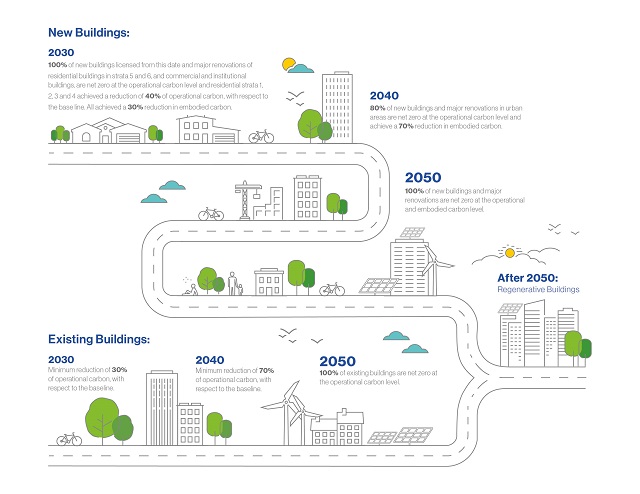
Colombia’s National Roadmap for Net Zero Carbon Buildings, launched in June 2022 by the Ministry of Environment and Sustainable Development, aims to achieve net zero in all new buildings by 2030 and all buildings by 2050. Developed in partnership with WRI’s Zero Carbon Building Accelerator, the roadmap provides a framework for how the country can decarbonize the built environment by setting out clear goals, defining actions and identifying the actors responsible for implementation. To achieve sectoral transformation, short-, medium- and long-term actions have been identified across the value chain of the buildings and construction sector – including urban planning, materials, transportation and distribution, design, labeling, certification, water and energy use, and waste management.
Plotting the Course
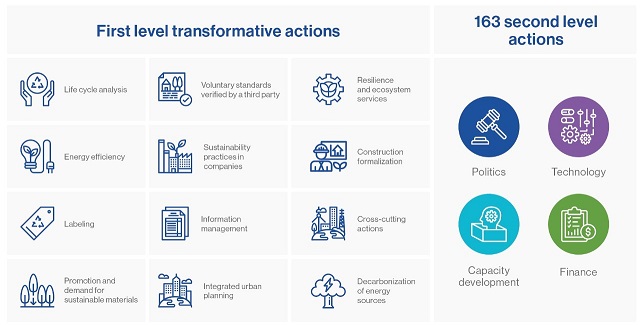
The roadmap assesses the current status of the buildings sector and evaluates potential social and environmental impacts of net zero buildings nationally. To reach the ambitious goal of decarbonizing the built environment, the roadmap breaks down 67 goals and 175 transformative actions across six areas: Corporate Practices, Materials, Urban Planning, New Buildings, Existing Buildings and Informal Settlements.
Colombia is distinct in that it includes the informal construction sector alongside the formal in its net zero planning. Nationally, unlicensed buildings account for 19-29% of the building stock and as high as 55-70% in some cities. This unlicensed or informal sector presents a significant challenge to decarbonizing the built environment. “Formalizing” it could reduce construction and demolition waste, improve building materials, and improve the quality of life and health of low-income families. But doing so affordably and justly, without displacing residents, has been difficult for many cities.
The roadmap includes recommendations for ensuring that improving existing homes and buildings takes a participatory, inclusive approach with communities. It also highlights the importance of financial education and programs for communities to make access to formal housing more viable – for example, alternative leasing and mortgage schemes for those without traditional access to financing.
The country has developed regulations and incentives for energy efficiency, clean energy and grid decarbonization. However, there are still regulatory short-falls and barriers, and access to highly efficient building technologies is still lacking. The roadmap sets out to address these challenges by linking specific political, financial, technological and capacity building transformative actions in each of the six action areas to short-, medium- and long-term goals and identifying actors responsible for implementation. The ultimate aim is to achieve the mainstreaming of zero carbon buildings nationally.
The roadmap also includes chapters on the role of financing and how social and gender equity are integrated into transformative actions – for example, utilizing gender-inclusive participatory approaches in urban planning, and diminishing national energy poverty rates with clean energy connectivity for buildings.
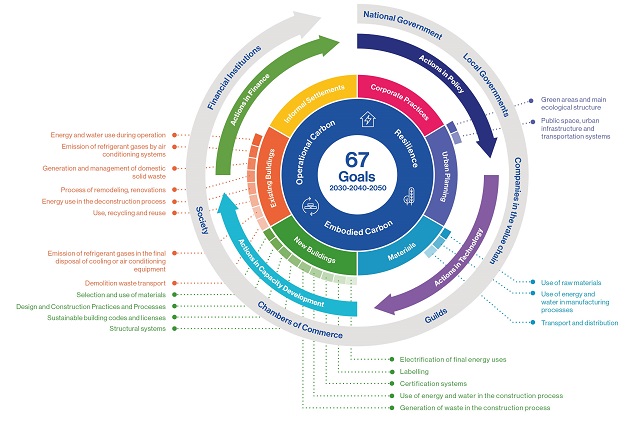
Actions are connected to project enablers (policy, technology, capacity development and finance) and linked to the key actors across the value chain and building lifecycle for implementation of those actions.
The country’s biggest barrier may be existing buildings, including the informal sector. Currently there are no regulations or incentives promoting energy efficiency in existing buildings and retrofits. Transformative actions in the roadmap identify regulatory instruments and incentives to build capacity and provide the necessary technology for implementing retrofits for net zero buildings. This includes electrification of space heating and cooling, energy efficient appliances, and onsite clean energy generation.
Multi-Level Action
Colombia’s net zero buildings roadmap marks the culmination of a year’s worth of work by national and local government, the private sector and civil society as a part of WRI’s Zero Carbon Building Accelerator. Multi-level action like this is key to delivering on Colombia’s Nationally Determined Contributions (NDCs) and long-term climate vision in all sectors, but especially buildings, where actions cross between housing, energy, national and city planning, for example.
Nine working groups with nearly 400 stakeholders from different sectors across the value chain have participated in the development of the roadmap. Input from these groups informed the baseline assessment of the buildings sector in Colombia, analyzed the challenges and barriers to implementing zero carbon buildings, and identified the transformative actions needed to decarbonize buildings nationally.
Consejo Colombiano de Construcción Sostenible (“Colombia Green Building Council” or CCCS) led the on-the-ground engagement and facilitation of the roadmap project, building off previous networks and relationships forged during its work with the Building Efficiency Accelerator. Though the roadmap was spearheaded by Colombia’s Ministry of Environment and Sustainable Development, an advisory committee of representatives from the Ministry of Housing, National Planning Department, City Planning Department of Bogotá, City Planning Department of Cali, CAMACOL – Colombian Construction Chamber, and CCCS served as the governing body of the project, promoting integration across national ministries and at multiple levels of government.
Toward Carbon Neutrality
Colombia’s NDCs call for a 51% reduction in greenhouse gas emissions by 2030. The national roadmap for buildings is aligned with other implementation and monitoring plans for Colombia’s NDCs, and these new building decarbonization goals will support the country in achieving its NDCs.
Beyond the shorter time frame of the NDCs, Colombia’s Long-Term Climate Strategy (E2050), launched at COP26, calls for a carbon-neutral Colombia by 2050 through resilient development and a circular economy. As the Net Zero Buildings Roadmap considers the whole building lifecycle and provides short-, medium- and long-term goals for achieving carbon neutrality, it can be a model for other sectoral plans to reach these goals and a first step toward implementing the country’s circular economy vision.
With this new roadmap, Colombia’s national and local governments, private sector and civil society have recognized the necessity and impact of transforming the buildings and construction sector in achieving its NDC and E2050 goals.
When presenting the roadmap, Deputy Minister of the Environment and Sustainable Development Nicolás Galarza Sánchez emphasized this point, saying that Colombia must reduce 174 million tons of emissions by 2030 to achieve its NDCs and the implementation of these transformative actions could reduce buildings sector emissions 53% by 2030. “This roadmap proves not only our commitment but also our ambition and vision for a carbon-neutral country,” he said.
Colombia’s goal of reaching net zero in all buildings by 2050 is an important step closer to being realized. The Zero Carbon Building Accelerator will continue working with Colombia by creating local action plans in Bogotá and Cali for implementation of the roadmap at the municipal level as well as policy updates for building codes nationally.
Kayla Rakes is the Engagement Coordinator for the Buildings Initiative at WRI Ross Center for Sustainable Cities.
The post Colombia Launches National Roadmap for Net Zero Carbon Buildings appeared first on Building Efficiency Accelerator.
]]>The post Identifying Transformative Actions in Colombia appeared first on Building Efficiency Accelerator.
]]>Since March 2021, WRI’s Zero Carbon Building Accelerator has been working with Consejo Colombiano de Construcción Sostenible (Colombia Green Building Council, or CCCS) to develop a national roadmap for building decarbonization, as well as city action plans for local implementation of the roadmap in Cali and Bogota, Colombia.
CCCS established nine stakeholder working groups at the beginning of the project to address each stage of the building lifecycle, enabling actions and local contexts. Prior to the development of the stakeholder working groups, the project’s Steering Committee — made up of national and local government leadership — mapped actors across sectors and across the building lifecycle to ensure all relevant stakeholders were at the table in discussing decarbonization of the built environment. Throughout this collective process, diverse stakeholders have actively participated in a series of monthly workshops, giving feedback and guidance on a baseline assessment, gap analysis, and recommendations for transformative actions.
After collecting initial input for the baseline assessment and feedback on its results, CCCS was able to compare the current situation to the desired outcome: all buildings decarbonized by 2050. With the baseline assessment in hand, CCCS began developing a gap analysis to better understand the major barriers and challenges to building decarbonization, and what transformative actions would be needed to overcome them. The team set out a strategic methodology for identifying and prioritizing transformative actions to be included in a recommendations report and ultimately, the national roadmap.
Preliminary Gap Analysis Research
To begin the gap analysis investigation, CCCS relied heavily on international touchstones to inform how building decarbonization could be approached in Colombia. The team examined existing national and subnational frameworks to compile definitions and study actions already in use globally. This initial research was the basis of the gap analysis.
Excerpt of References
Excerpt of References
A Methodology for Evaluating Transformative Actions
Once CCCS compiled the list of transformative actions used internationally, the team evaluated each action’s current status in Colombia. The team categorized actions based on the GlobalABC’s Global Roadmap’s Action Areas, which is in line with the division of the stakeholder working groups and also included country-specific interests. The team created a scale to evaluate the status of each transformative action in each enabler category1, with 0 generally being nonexistent to 5 being fully implemented and monitored. The team also evaluated actions based on cross-cutting themes (Figure 2) established by CCCS and stakeholders, which speak to goals and climate priorities established by the national government. These cross-cutting themes were particularly useful for integrating equity and inclusion into the recommendations and highlighting solutions with embedded co-benefits.
Figure 1. Enablers Scale
| Development Level | Policies | Technology | Finance | Capacity building |
|---|---|---|---|---|
| 0 | No relevant policies or regulations | No tool or technology exists | No financial instrument exists | No training programs |
| 1 | There is a public policy initiative | There is a public or private initiative to implement technology | There is a public policy or financial sector initiative | There is a public policy initiative to develop capacity |
| 2 | It is regulated | There is public or private research for development | It is regulated or already exists in the market | There are some trainings and certifications provided by technical, academic, or government programs |
| 3 | It’s partially implemented | The tool/technology exists, but is not being implemented in a widespread way | It is being implemented | Generally, there are trainings and certifications provided by technical, academic, or government programs |
| 4 | Implementation is widespread | Implementation is widespread but with gaps in the best technology available | Implementation is widespread ad differentiates between sustainability levels | There are technical, academic, and professional programs dedicated to training |
| 4 | Implementation is widespread | Implementation is widespread but with gaps in the best technology available | Implementation is widespread ad differentiates between sustainability levels | There are technical, academic, and professional programs dedicated to training |
| 5 | Implemented effectively with monitoring and evaluation processes to realign and improve | Implementation is widespread with no gaps in best available technology | Enables innovative business models that consider the externalities of climate change. They only finance sustainable projects. | There are research groups dedicated public and private innovators. |
Figure 2: Cross-cutting Themes Scale
| Development Level | Job Skills2 | Equity & Inclusion3 | Consumption Habits4 | Resiliency & Risk Management5 | Habitability6 |
|---|---|---|---|---|---|
| 0 | Not included as criteria | Equity and inclusion not considered | Not included as criteria | Not included as criteria | Not included as criteria |
| 1 | There is a initiative to develop job skills | There is an initiative which includes equity and inclusion as criteria | There is an initiative that includes consumption habits as criteria | There is an initiative that includes the resilience and risk management as criteria | There is an initiative that includes habitability as criteria |
| 2 | There are some actions to develop job skills | There are some actions that include equity and inclusion as criteria | There are some actions that include consumption habits as criteria | There are some actions that include resilience and risk management as criteria | There are some actions that include habitability as criteria |
| 3 | There are various actions to develop job skills | There are various actions that include equity and inclusion as criteria | There are various actions that include the consumption habits as criteria | There are various actions that include the resilience and risk management as criteria | There are various actions that include habitability |
| 4 | There are various actions with effective implementation and monitoring and evaluation | There are various actions with effective implementation and monitoring and evaluation | There are various actions with effective implementation and monitoring and evaluation | There are various actions with effective implementation and monitoring and evaluation | There are various actions with effective implementation and monitoring and evaluation |
| 5 | Mainstreams job skills among relevant actors | Transition to a sustainable, equitable and inclusive built environment | Transforms the market and consumption habits | Transition to a resilient built environment | Transition to a healthy and comfortable built environment |
Stakeholder Feedback
Once CCCS undertook the preliminary assessment of transformative actions, the team brought it back to the stakeholder groups to get their input on the initial gap analysis. Stakeholder working groups, which were established during the baseline assessment phase of the project, were divided into subgroups based on their interests and expertise. The CCCS technical team presented the gap analysis and transformative actions to the designated groups and conducted an in-depth review of each action.
Using the scale, the subgroups examined the scale of development and compared it with the preliminary rating assigned to each category. Subgroups also evaluated transformative actions based on when they would need to be implemented to achieve short-, medium-, and long-term goals; they analyzed national- and local-level actions simultaneously. This dialogue with stakeholders helped the team validate and adjust international transformative actions so that they would be suitable to the local context in Colombia.
The gap analysis has been a crucial step in setting a clear pathway to achieving zero-carbon buildings in Colombia by 2050 and for implementation locally. The stakeholder dialogue articulated the needs and gaps in different sectors, socialized initiatives and findings, and found synergies to push the construction sector towards development that’s aligned with the country’s larger climate goals. The methodology undertaken by CCCS continues to advance the engagement process and positions the roadmap to better address the specific needs of national and subnational governments. Clearly defining transformative actions and evaluating their current status has illuminated areas that will require additional support in the transition toward decarbonization and market transformation.
Insights from the Transformative Actions
Upon completing the gap analysis, the main policy and regulatory recommendations are in energy efficiency, clean energy use, and decarbonization of the energy grid, as these will have the largest impact on reducing emissions. Short-term recommendations focus on regulatory barriers and technology accessibility issues that must be resolved in the coming years to achieve mass implementation of clean energy and energy efficiency measures in all buildings. Similarly, existing buildings are posed to be a significant challenge, as most regulations requiring water and energy savings in buildings target new construction, and do not apply to existing buildings or renovations.
The country’s largest gaps for implementing zero-carbon buildings in Colombia remain in embodied carbon, as currently there are still no clear policies or incentives that promote the development of low-carbon construction materials and systems. Colombia still relies heavily on carbon-intensive building materials like cement, concrete, steel and brick, while low-carbon wood construction systems are virtually non-existent. Very few products on the market have Life Cycle Assessment (LCA) calculations and Environmental Product Declarations (EPD), leaving the industry with limited data about emissions impacts. While construction methods don’t necessarily have to be high-tech, prefabricated or industrialized, construction systems can reduce environmental impacts while also increasing comfort and habitability. These high-tech methods are not widely available in Colombia, and the construction and operational performance of buildings suffer as a consequence.
As a part of the Zero Carbon Building Accelerator, the gap analysis is a key strategy for developing national roadmaps and city action plans in both Colombia and Turkey. This step is essential for understanding how international frameworks for building decarbonization can be applied in each country and contextualizing transformative actions to the local situation. In Colombia, the process identified the next steps in meeting building decarbonization goals while also aligning with larger, ambitious climate goals across sectors.
Footnotes
1 Enablers were identified by the GlobalABC’s GlobalABC Roadmap for Buildings and Construction 2020-2050
2 Green job skills are the knowledge, abilities, values and attitudes needed to live in, develop and support a sustainable and resource-efficient society.
3 Equity and inclusion ensure full participation and access to quality opportunities for all while respecting and valuing diversity and eliminating discrimination. It is a commitment to meeting the needs of underserved communities through policies and programs that reduce disparities while fostering places that are healthy and vibrant.
4 Building occupant consumption habits are crucial to the operation of net zero carbon buildings. As such, transformative actions should promote sustainable consumption and production habits at all stages of the building lifecycle to increase efficiency and reduce energy and water waste.
5 Resiliency in the built environment refers to the ability to continue functioning or recover quickly in the face of sudden or chronic external failure such as water shortage, power outage, or a natural disaster, while risk management refers to decreasing risks in the construction/development stage and reducing or eliminating potential hazards for the future.
6 Habitability guarantees physical safety in buildings including proper ventilation and protection against the cold, wetness, heat, wind, other threats to health and structural hazards.
The post Identifying Transformative Actions in Colombia appeared first on Building Efficiency Accelerator.
]]>The post Webinar: Zero Carbon Building Accelerator – Stakeholder Engagement in Colombia appeared first on Building Efficiency Accelerator.
]]>In this one-hour webinar WRI and its partners, Consejo Colombiano de Construcción Sostenible (CCCS) will share lessons learned about stakeholder engagement in the road mapping process and discuss how aligning local and national actors promotes a holistic approach to building decarbonization. The session will close with Q&A and open discussion for peer-to-peer learning.
The webinar will be available in English and Spanish.
Speakers:
- Sumedha Malaviya, Senior Program Manager, Zero Carbon Building Accelerator, WRI India
- Fairuz Loutfi, Circular Economy and Energy Efficiency Manager, WRI México
- Angélica Ospina, Technical Director, Consejo Colombiano de Construcción Sustentable (CCCS)
En Español:
Acelerador de edificaciones neto cero carbono: Participación de las partes interesadas en Colombia
En 2020, como parte del Acelerador de Edificaciones Neto Zero Carbono (ZCBA por sus siglas en inglés), Colombia fue seleccionada para recibir apoyo técnico y financiero para desarrollar una Hoja de Ruta Nacional para la descarbonización de las edificaciones y planes de acción locales para implementarse en las ciudades de Cali y Bogotá. Al inicio del proyecto, un comité directivo multinivel y nueve grupos de trabajo fueron creados para recopilar diversas perspectivas de todos los sectores y tomar parte en la hoja de ruta y en los planes de acción.
En este seminario web de una hora, WRI y sus socios, el Consejo Colombiano de Construcción Sostenible (CCCS) compartirán las lecciones aprendidas sobre la participación de las partes interesadas en el proceso de elaboración de la hoja de ruta y discutirán cómo la alineación de los actores locales y nacionales promueve un enfoque holístico para la descarbonización de las edificaciones. La sesión concluirá con preguntas y respuestas y una discusión abierta para el aprendizaje entre pares.
El seminario web estará disponible en inglés y español (traducción simultánea).
Panelistas:
- Sumedha Malaviya, Gerente Senior de Programa, Acelerador de Edificaciones Neto Cero Carbono (ZCBA), WRI India
- Fairuz Loutfi, Gerente de Economía Circular y Eficiencia Energética, WRI México
- Angélica Ospina, Directora Técnica, Consejo Colombiano de Construcción Sostenible (CCCS)
The post Webinar: Zero Carbon Building Accelerator – Stakeholder Engagement in Colombia appeared first on Building Efficiency Accelerator.
]]>The post How Stakeholder Working Groups Are Advancing the Zero Carbon Building Accelerator in Colombia appeared first on Building Efficiency Accelerator.
]]>With this success and others as a part of the BEA and the country’s clear ambition toward sectoral decarbonization as seen in the 2050 Carbon Neutrality Strategy (E2050), Colombia was selected in 2020 receive technical and financial support to develop a national Zero Carbon Building Roadmap and two local action plans for implementation as a part of WRI’s Zero Carbon Building Accelerator (ZCBA).
The partnership is working to produce a roadmap that will be adopted by the national government and further modify Resolution 549 to implement zero carbon buildings nationally. CCCS is again leading on-the-ground organization with national and local actors across sectors and industries. WRI centers stakeholder engagement in the ZCBA roadmap and action planning approaches to ensure holistic and deep systemic transformation. Implementing actors from every stage of the building lifecycle must be included in the planning and design of long-term solutions to effectively deliver the government’s current commitments and bring real-world change.
Building National Stakeholder Engagement
In April 2021, a national launch event was held to announce the Zero Carbon Building Accelerator project and its goals in Colombia. The event also included a panel discussion to give context to the current state of zero carbon buildings in the country and was followed by an interactive session that gathered preliminary stakeholder input and deepened relationships in the field.
Participating virtually, 199 attendees from government, the private sector, academia and civil society joined the call to hear from national and local government officials, as well as the CEO of the World Green Building Council, as they announced how the ZCBA would interact at the national and local levels in Colombia.
During the panel discussion, private and financial institutions, engineers, designers and government representatives shared their perspectives on the opportunities and challenges in achieving zero carbon buildings in Colombia.
Key themes identified by panelists included:
- Alignment of national and local policies for the implementation of zero carbon buildings.
- The importance of regulations that encourage and support secure futures for entrepreneurs and investors.
- Capitalizing on green development as a solid business investment.
- Building capacity for a sustainable building and construction sector through workforce training programs and public education campaigns.
- Research and technological developments as key drivers to reduce CO2 in the materials manufacturing processes.
- Strategizing to manage informal development.
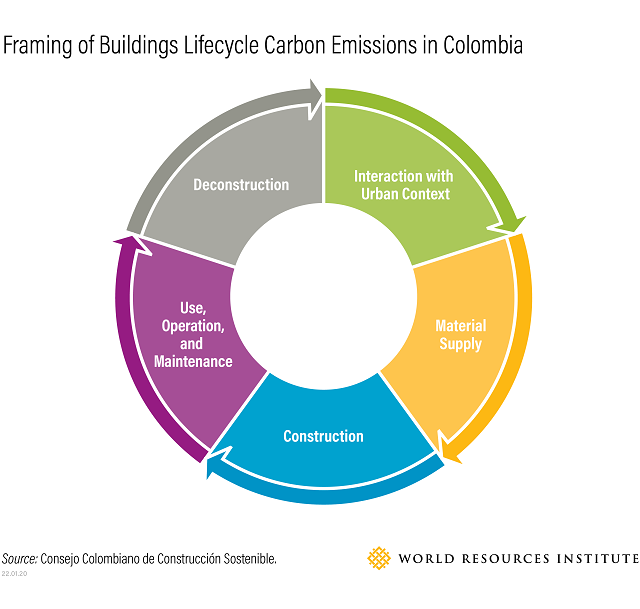
With this context, an interactive session asked participants questions about the distribution of CO2 emissions throughout the lifecycle of buildings. The lifecycle was broken down into five categories and subcategories:
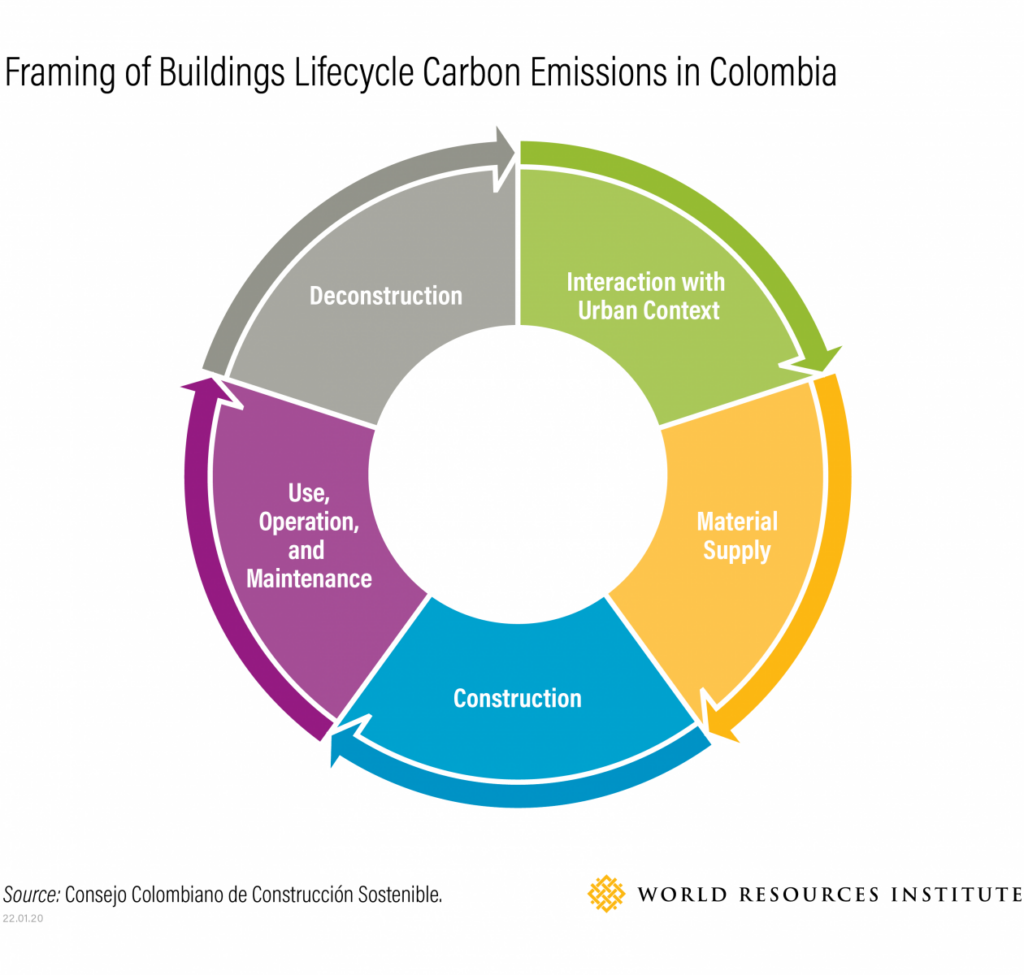
| Phase of Lifecycle | CO2 Sources |
|---|---|
| Environmental Integration | Green Space (Quality and Quantity)Public SpaceUrban InfrastructureTransportation SystemsEquipment |
| Material Supply | Raw Material ExtractionIncorporation of Used Raw MaterialsManufacturing ProcessEnergy Supply in Manufacturing ProcessWater Supply in Manufacturing ProcessTransportation and Distribution |
| Construction | Energy Use and Supply in Construction ProcessWater Use and Supply in Construction ProcessEmissions Generated from Heavy EquipmentWastewater Produced from the Construction Process |
| Use, Operation and Maintenance | Operational Energy Use and SupplyOperational Water Use and SupplyCooling Systems EmissionsOperational WastewaterSolid Waste Production and ManagementRemodels and Repairs |
| Demolition | Final Waste Disposal ProcessTransportation of Construction and Demolition WasteEnergy Use and Supply for DemolitionRecycling and Reuse of Materials. |
For each phase of the building lifecycle, participants were asked about:
- How each phase contributed to the reduction and generation of emissions in buildings.
- Whether subcategories should be added or removed from the phase.
- The prioritization of subcategories based on their impact to achieve net zero carbon buildings.
- References to inform the baseline assessment for each phase of the lifecycle, looking specifically at insights into policy, finance, innovation, technology, renewable energy and capacity building.
At the end of the session, attendees were encouraged to continue participating in the road mapping process throughout the ZCBA project by joining stakeholder working groups. Working groups inform and review the baseline assessment, provide insights for the gap analysis, identify transformative actions for the recommendation report and ultimately give feedback on the national roadmap before it is finalized.
Stakeholder Working Groups
To ensure a holistic and inclusive approach, an advisory committee and nine stakeholder working groups were established to guide the road mapping process and address the building lifecycle action areas and enablers outlined in by the GlobalABC’s Roadmap for Buildings and Construction.
A key institutional structure for the ZCBA in Colombia is the advisory committee, the governing body of the project which aims to align the vision of the accelerator at the national and local levels. The advisory committee is comprised of representatives from the Ministry of Environment and Sustainable Development, Ministry of Housing, National Planning Department, City Planning Department of Bogotá, City Planning Department of Cali, CAMACOL – Colombian Construction Chamber and CCCS.
Building on the national launch event, nine working groups were devised to garner feedback on the building lifecycle, promote enabling actions and adapt national recommendations to the local context. Stakeholders self-selected the working group they were most interested in advising on and where they felt their expertise would be most impactful.
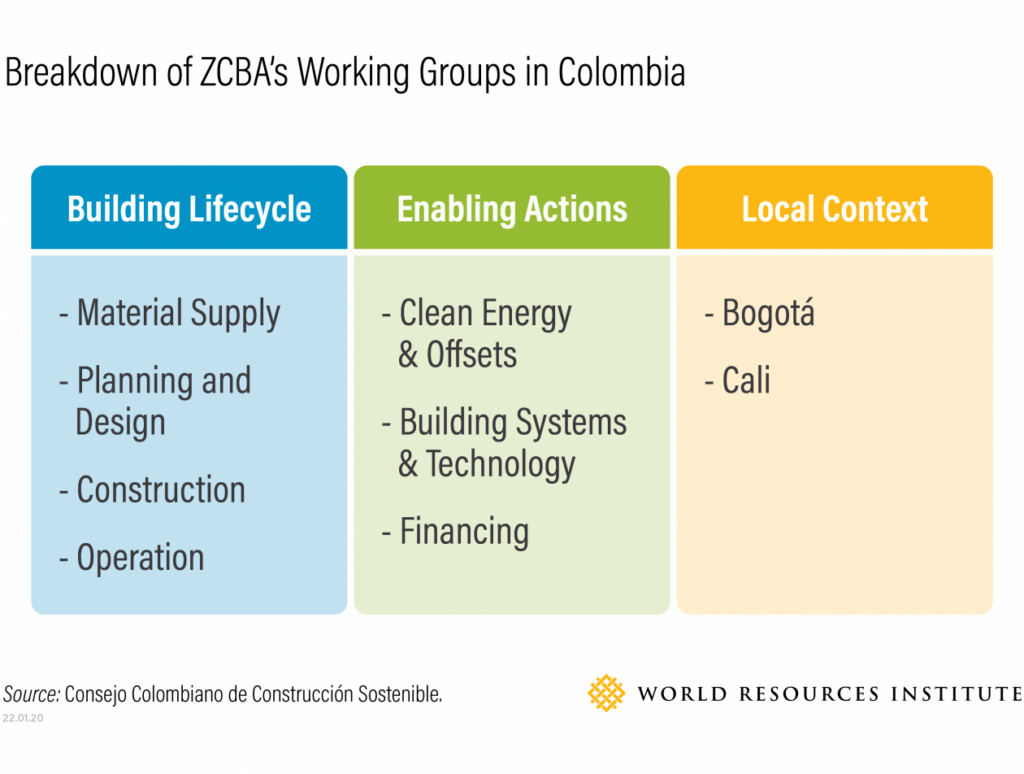
Each of the nine working groups meets monthly to support the successive phase of the project. The workshops begin with presentations from CCCS to give updates and context to the project, followed by engagement activities where participants give feedback, share insights and advise on inputs or alternative ideas. Thus far, working groups have informed the current state of construction analysis, baseline assessment and gap analysis.
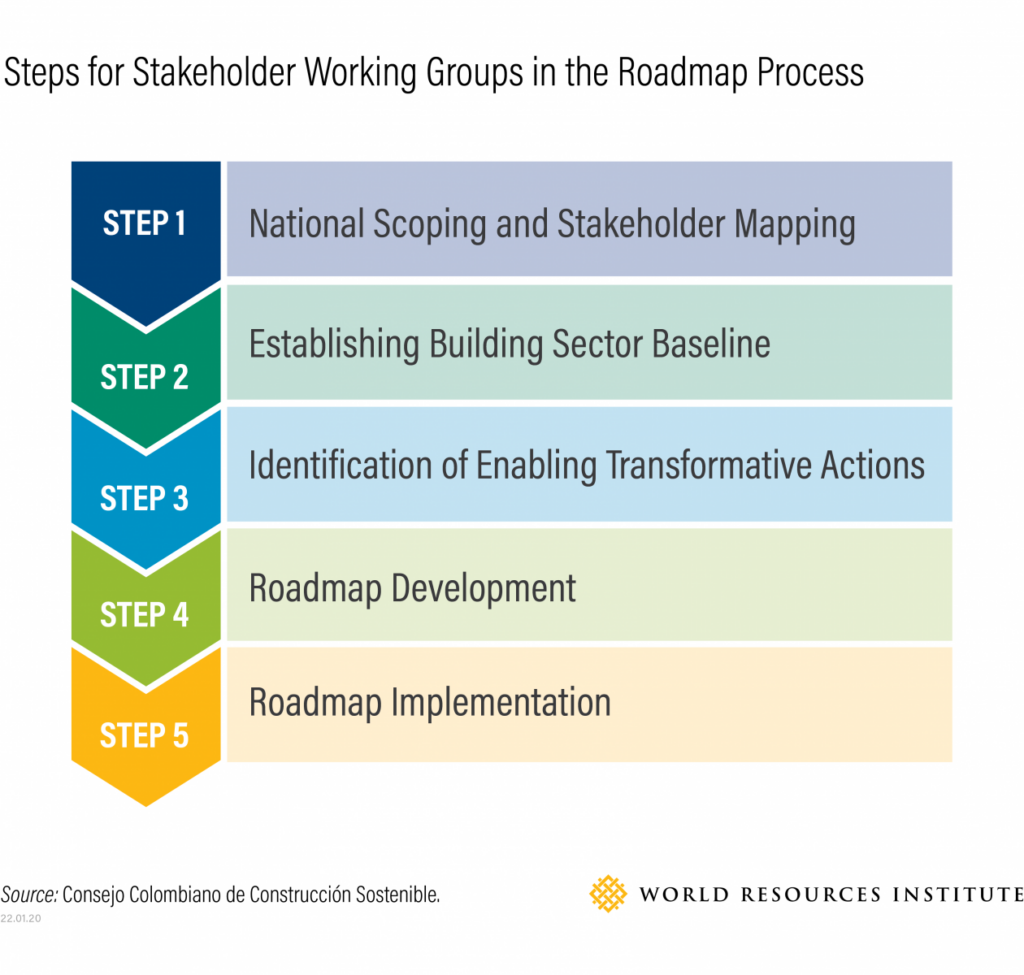
CCCS has centered the road mapping process on the stakeholder working groups to bring insights and feedback into their methodology that may have been unseen without diverse perspectives from across sectors. Bringing deep systematic change to the building and construction sector requires that the actors who will be implementing the roadmap be incorporated into the planning and design in order to strategize whole lifecycle actions and solutions that will be realistic, viable and successful. Further updates on Colombia’s progress will be shared as the Zero Carbon Building Accelerator project continues over the next year.
The post How Stakeholder Working Groups Are Advancing the Zero Carbon Building Accelerator in Colombia appeared first on Building Efficiency Accelerator.
]]>The post BEA Welcomes 13 New Jurisdictions, Reaching Over 50 Global Members appeared first on Building Efficiency Accelerator.
]]>- Betim, Brazil
- Cali, Colombia
- Curridabat, Costa Rica
- Fortaleza, Brazil
- Guatemala City, Guatemala
- Kochi, India
- Monteria, Colombia
- Nuevo León, Mexico
- Recife, Brazil
- San Salvador, El Salvador
- Santa Ana, Costa Rica
- uMhlathuze, South Africa
- Yucatán, Mexico
We also welcome the expertise of our new organizational partner Rockwool. The BEA is actively recruiting new partners. Cities and other subnational jurisdictions interested in joining the BEA can email us directly at [email protected] for more information.
The post BEA Welcomes 13 New Jurisdictions, Reaching Over 50 Global Members appeared first on Building Efficiency Accelerator.
]]>The post How Mexico City Can Unlock Finance for Retrofitting Public Buildings appeared first on Building Efficiency Accelerator.
]]>The most common channel for financing retrofits of publicly owned buildings is internal budgeting. However, this is often a challenge, as many retrofits have a long pay-back period and many cities only have the legal authority to budget for one year. Additionally, city agencies may find that, as a result of lower energy bills in one year, their budgets are lowered in subsequent years. If internal budgeting is not a viable option, cities may seek external resources to finance their building efficiency projects. However, the market for energy efficiency retrofits is often not mature enough to attract the level of investment needed.
On August 6th, nearly 100 participants with both international and domestic backgrounds gathered in Mexico City to explore options for overcoming these financial barriers to implementing energy retrofits in Mexico City’s municipal buildings. From internal strategies to public policy, these innovative solutions have the potential to make Mexico City’s buildings leaders in energy efficiency.
Adapting Existing Budgeting and Financing Options for Municipal Retrofits
Agencies in Mexico City should consider utilizing existing legal and financial mechanisms to invest in energy efficiency retrofits. For example:
- Agencies may be able to establish contracts with terms exceeding one year, which would facilitate multi-year agreements with energy services companies.
- Mexico City should explore the potential for public-private partnerships. In such a partnership, government agencies would maintain ownership of the building, but the operation of the building, including energy efficiency retrofits and energy management, is transferred to a private sector operator who would receive compensation.
- Existing funds, such as Mexico’s national infrastructure fund FONADIN, may be potential sources for financing energy efficiency. FONADIN’s purpose is to support projects that generate public benefits but are not attractive enough for the private sector to support.
Mobilizing External Sources of Funding
Municipal governments should also focus on making projects more financially attractive to investors. Two potential ways to accomplish this are:
- Support the development of an energy services market for both municipal and private buildings. While the energy services company (ESCO) model has successfully catalyzed energy efficiency investments in markets such as China and the United States—where energy savings are used as collateral to finance retrofits—the model has not yet matured in Mexico. This is partially due to uncertainty around repayment, which poses a risk to financial institutions. More third party auditors are needed in Mexico to conduct credible assessments of energy savings so that cities and building owners have accurate, reliable information about how much energy has been saved. Fortunately, efforts are underway to train and certify more auditors in Mexico. In addition, standardizing the documents needed for projects and bundling projects will better enable financial decision makers to assess them.
- Explore the creation of an energy efficiency trust fund, drawing on current trust funds in Mexico for examples. Such a trust fund could aggregate multiple energy efficiency projects, reducing overall risk and transaction cost, consequently making projects more attractive to external investors. This could also be used to address the budgeting challenge, in that the fund could allow the government to set aside and “recycle” the savings from efficiency projects into new investments, rather than having the cost savings reduce future budgets.
While overcoming these barriers will be challenging, examples of innovation and leadership in the energy efficiency space abound in Mexico. For example, Sociedad Hipotecaria Federal’s EcoCasa program, as well as INFONAVIT’s green mortgage, are enabling the construction and retrofit of thousands of energy efficient homes in Mexico. Further, the Inter-American Development Bank has recently announced a new green bond program to finance Mexican ESCOs. Demonstrating its commitment to boosting investment in energy efficiency, the Mexican government is co-chairing the G20’s International Partnership for Energy Efficiency Cooperation. Financing efficiency is a global challenge, but Mexico City is continuing to move the dialogue forward.
The post How Mexico City Can Unlock Finance for Retrofitting Public Buildings appeared first on Building Efficiency Accelerator.
]]>The post Accelerating Building Efficiency Improvements in Latin America appeared first on Building Efficiency Accelerator.
]]>The UN Sustainable Energy for All (SE4ALL) Building Efficiency Accelerator is an international, multi-stakeholder network devoted to helping cities and sub-national governments speed up the adoption of best-practice building efficiency policies and double their rate of energy efficiency improvement. The network also includes a number of corporate and NGO partners that cover a range of technical competencies across the building design, construction, operations and retrofit life cycle. The World Resources Institute (WRI) Building Efficiency Initiative serves as the managing partner for the Building Efficiency Accelerator and leads a broad coalition of partners including ICLEI, the World Green Building Council, WBCSD and others in coordinating engagements in Latin America and around the world.
At the 2014 Climate Summit, Mexico City announced a commitment to the SE4ALL Building Efficiency Accelerator with goals to adopt a local energy code and undertake a retrofit of public buildings. The WRI Building Efficiency Initiative and WRI’s Mexico affiliate CTS EMBARQ are leading the Mexico City engagement. In March 2015, a multi-stakeholder workshop was convened where over 100 participants from local technical organizations, businesses and federal ministries met with the city, SE4All leaders and international delegates. In April, the partners formed four working groups co-chaired by Mexico City and a local partner. These groups meet every few weeks and conduct technical workshops to complete the recommendations which will be presented to the Mexico City government in September 2015.
In June, the Global Green Growth Forum held their Latin American and Caribbean meeting in Santiago, Chile where building efficiency policy challenges and market solutions were discussed during a session on the SE4ALL Building Efficiency Accelerator. Christina Gamboa, Executive Director and CEO of the Colombia Green Building Council described the implementation challenges facing the region and the opportunity to promote building efficiency solutions that are attractive to both business and governments. Manuel Olivera, C40 regional director, then described the work they are doing with 11 cities in Latin America to improve public buildings, private buildings and transportation systems.
The session included participants from the public-sector, private-sector and civil society who collaborated to prioritize a number of building efficiency policies based on importance and difficulty of implementation. Building efficiency financing was considered very important, but relatively difficult to implement, while building energy codes and building certifications were nearly as important but easier to implement. A major recommendation coming out of the session was to focus on intermediate sized cities in Latin America with populations from 500,000 to 2 million. These cities often have committed leadership, less bureaucracy, limited capacity and receive less support from international organizations.
On September 9-10, the Colombia Green Building Council will host CONSTRUVERDE in Bogota where a similar session will be held to explore opportunities for the SE4ALL Building Efficiency Accelerator to engage with additional cities in Colombia and Latin America. For additional information on the SE4ALL Building Efficiency Accelerator, please join us in Bogota at CONSTRUVERDE, register for an upcoming WRI/ICLEI webinar on September 1, or view a previously recorded webinar.
This article was originally published on usgbc.org.
The post Accelerating Building Efficiency Improvements in Latin America appeared first on Building Efficiency Accelerator.
]]>